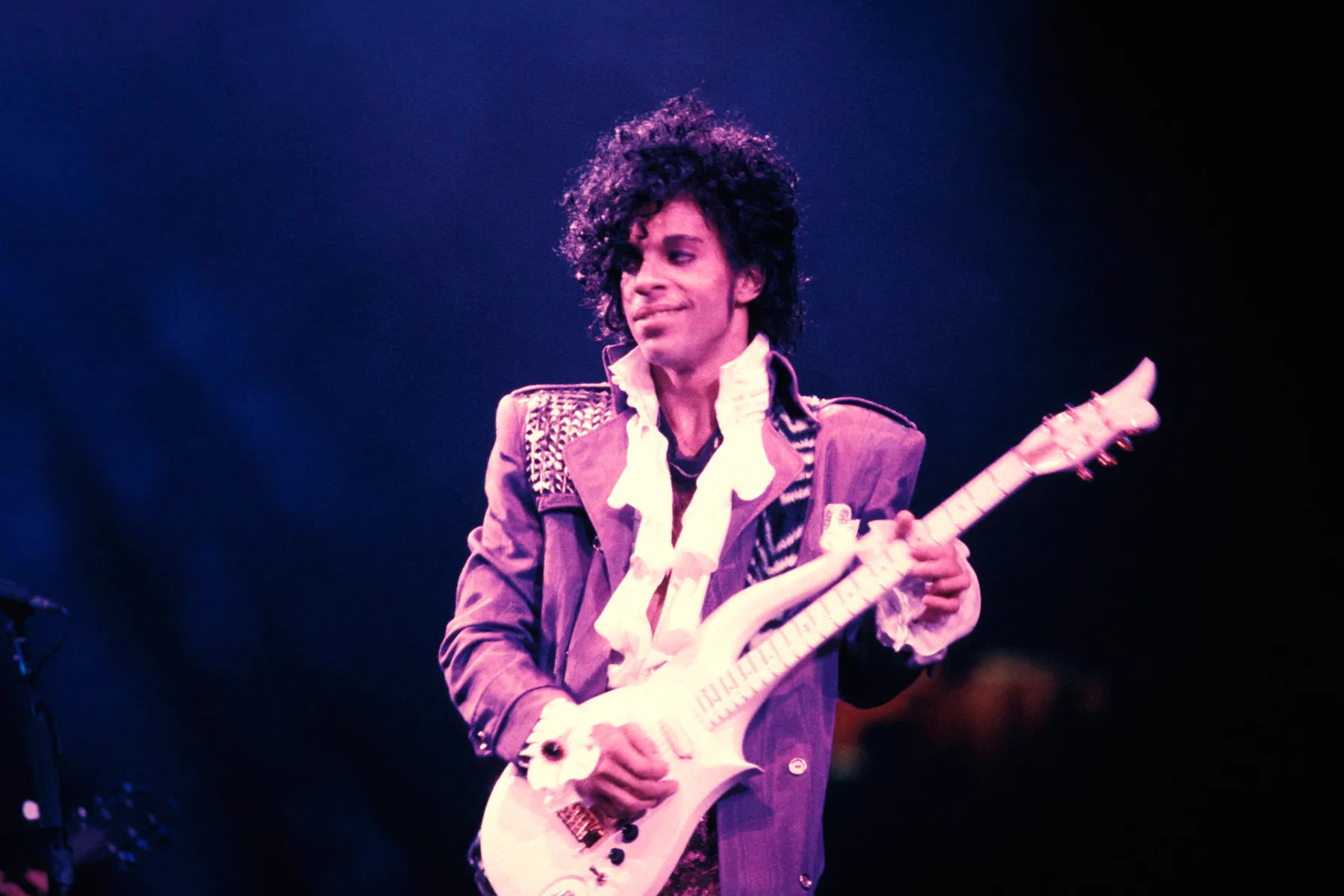
In the early 1990s, Prince was undisputed royalty in the music world. With a string of timeless hits, legendary stage presence, and unmatched creative genius, he seemed to have the world at his feet. Yet, beneath the glittering exterior of his fame, a silent storm was brewing. Fans were left utterly stunned in 1993 when Prince appeared in public with a shocking message written across his face. Painted in bold letters on his cheek was the word “SLAVE.” It was a staggering visual protest that became one of the most controversial and talked-about chapters in modern music history.
The dramatic gesture was not a mere publicity stunt but the boiling point of a fierce war between Prince and his record label, Warner Bros. At the heart of the bitter dispute was a battle for control over his own master recordings and his prolific musical output. Prince was a relentless creator, constantly writing and recording new material, but the label wanted him to slow down to avoid saturating the market. Feeling choked by corporate constraints and realizing he did not legally own the very art he created, Prince decided to wage a highly public war of independence.
To further distance himself from the contract he felt trapped by, Prince did the unthinkable: he legally killed off his own name. He adopted an unpronounceable glyph, a fusion of the male and female astrological symbols known as the Love Symbol. The media, baffled by the move, began referring to him as “The Artist Formerly Known as Prince.” By refusing to use the name registered to his record contract, he sought to render himself a free agent in a system he believed was designed to exploit artists.
This shocking rebellion divided the industry and the public alike. Some critics dismissed it as the self-indulgent antics of an eccentric superstar, while others recognized it as a courageous stand for artists’ rights. Prince was trying to expose a fundamental truth about the music industry of that era: that even the biggest stars were often beholden to corporate executives who owned the rights to their voices. His striking visual protest, with that single word painted on his face, forced a national conversation about ownership, freedom, and the true value of creative labor.
Decades later, we can look back at this turbulent era and realize just how ahead of his time Prince truly was. Long before the digital age made independent distribution possible, he was fighting the battles that would define the modern music landscape. He eventually reclaimed his name and, more importantly, secured the rights to his legendary catalog, proving that his defiance was not in vain. Do you remember the sheer shock of seeing him with that symbol, and how did his fearless fight change the way you looked at your favorite music stars?