The summer of 1967 was a time of immense cultural revolution, but nothing prepared the crowd at the Monterey Pop Festival for the seismic shift that was about to occur. On a cool California night, a young guitarist named Jimi Hendrix stepped onto the stage, ready to claim his throne. Already a sensation in London, the American audience had yet to fully experience his raw, untamed genius. By the end of his performance, he would not only capture their attention but burn his name forever into rock-and-roll history.
Backstage, the competitive tension was thick. The Who had just finished a highly destructive, instrument-smashing set, leaving the stage in ruins. Jimi Hendrix knew he had to deliver something even more spectacular, something that transcended mere showmanship. He was determined to leave an indelible mark on his home country. What followed was a brilliant piece of performance art that felt like an ancient ritual, permanently altering how the world viewed the electric guitar.
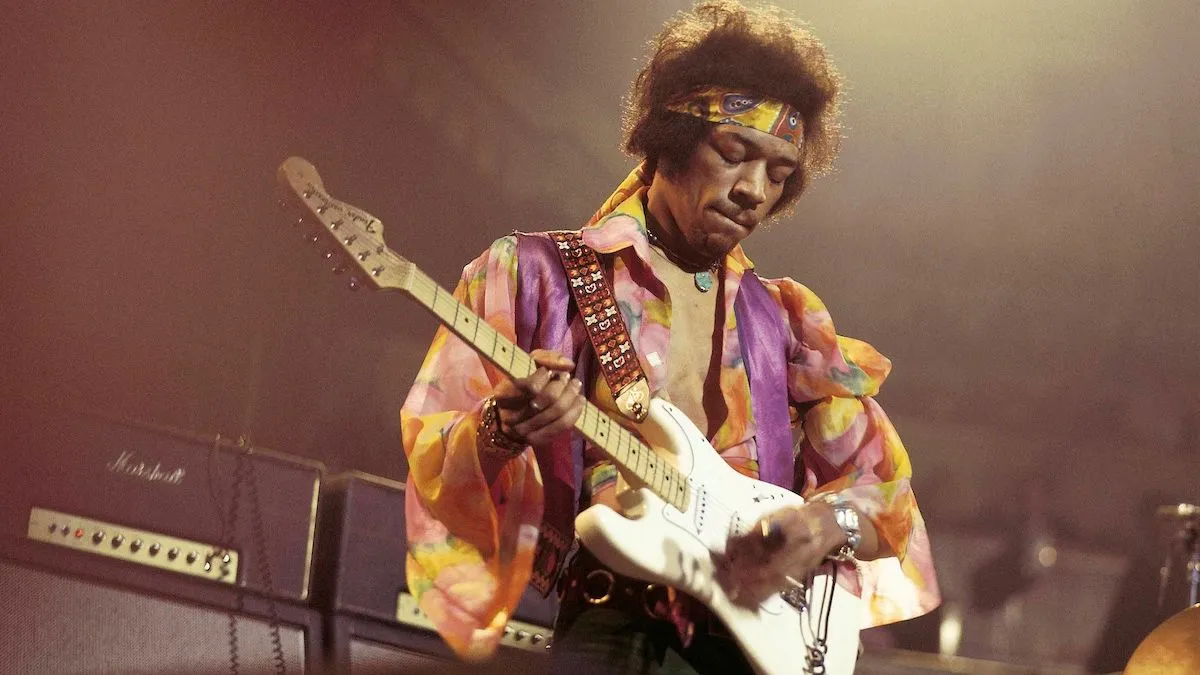
As the final, screaming feedback of Wild Thing wailed, Jimi Hendrix knelt over his hand-painted Fender Stratocaster. To the crowd’s absolute bewilderment, he produced a can of lighter fluid and doused the instrument. He kissed the guitar before striking a match. Flames leaped into the night air. Hendrix knelt before the fire, coaxing the flames upward with his hands as if summoning a musical deity, before smashing the burning relic repeatedly into the stage.
This act of rock sacrifice shocked conservative society and thrilled the youth. It was a moment of pure, dangerous theater that redefined live performance. While some dismissed it as a cheap gimmick, to those present, it was a profound declaration of artistic freedom. Jimi Hendrix later explained that he loved his instrument so much he wanted to sacrifice it to the music. This highly controversial act instantly propelled him to international superstardom overnight.
Looking back on that legendary night, we are reminded of an era when music was genuinely unpredictable and dangerous. In today’s highly polished, digital world, the raw passion of Jimi Hendrix kneeling before his burning guitar feels like a transmission from another universe. It was a time when artists risked everything to push the boundaries of expression. That single match ignited a cultural phenomenon that still influences generations of musicians more than five decades later.
For those who grew up during the golden age of classic rock, the image of Jimi Hendrix at Monterey remains the ultimate symbol of counterculture rebellion. It represents the fiery peak of a genius who burned incredibly bright and left us far too soon. Did you witness the rise of Hendrix, or can you still feel the heat of that legendary performance today? Share your memories of the golden era when rock and roll was truly wild.