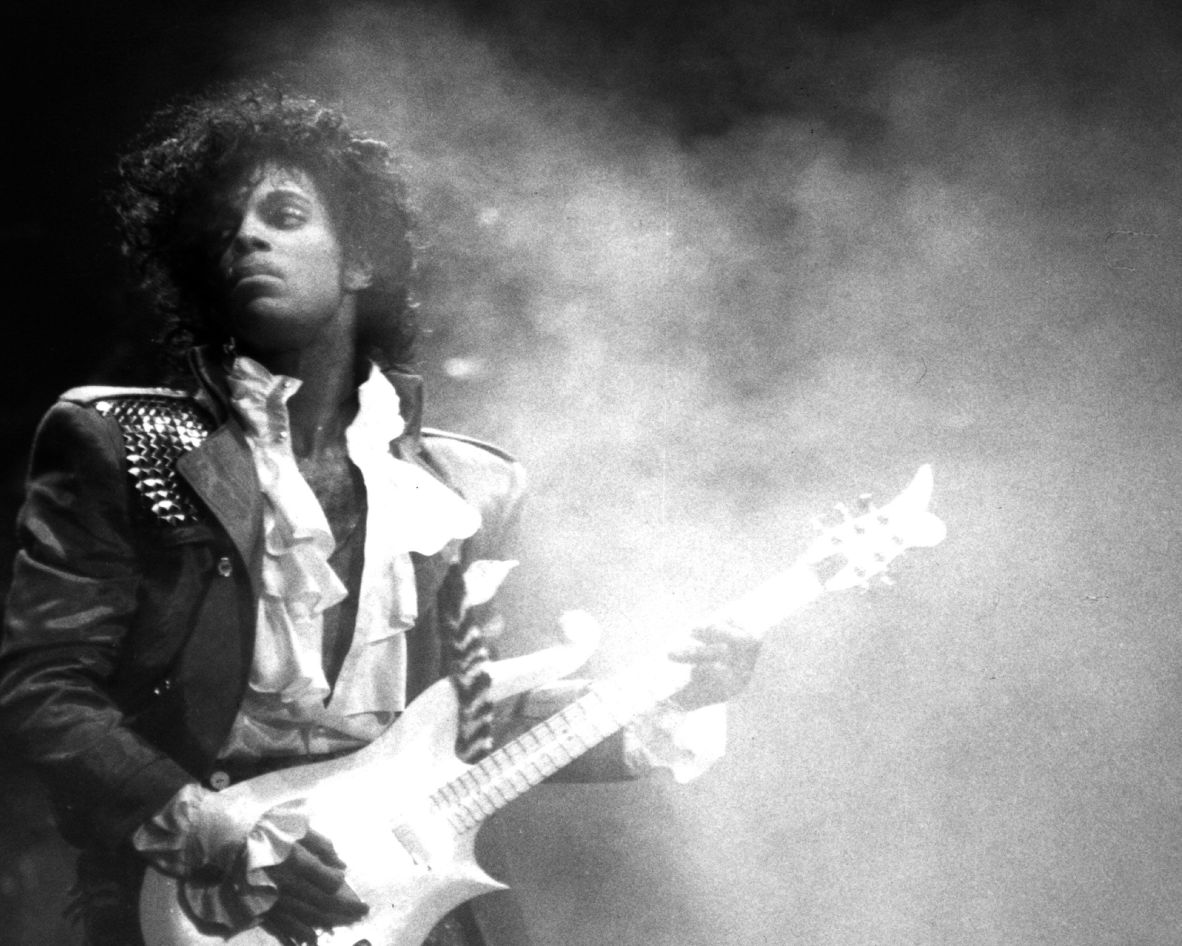
The most dangerous moment on Purple Rain was not the motorcycle, the smoky club lights, or Prince staring down the world in ruffles and eyeliner. It was a deep album cut tucked near the end of side one, the kind of track a teenager might discover alone beside the turntable. In 1984, “Darling Nikki” did what great rock and funk had always done: it made adults wonder what, exactly, was happening in the room upstairs.
By then, Prince was no longer just a Minneapolis prodigy with a falsetto and a wicked guitar tone. Purple Rain had turned him into a cultural weather system. The film was everywhere, the LP was spinning in bedrooms and cars across America, and “When Doves Cry” had already rewritten the rules of pop radio by stripping out the bass line and still conquering the charts. But “Darling Nikki” was something else—raw, theatrical, and unapologetically sexual, delivered over a grinding groove that sounded like neon sin pouring through a cracked church window.
The story became Washington legend. Tipper Gore, wife of then-Senator Al Gore, said she heard “Darling Nikki” after her young daughter brought home the Purple Rain album. The lyric that stopped her cold was not hidden behind metaphor. Prince sang about Nikki, a “sex fiend” met in a hotel lobby, and the song moved with the decadent confidence of an artist who knew exactly how far he was pushing the door open. To fans, it was Prince being Prince: playful, provocative, grown-up, and dangerous in the old rock ’n’ roll sense. To Gore, it was a warning bell.
Within a year, that private living-room shock helped fuel the Parents Music Resource Center, better known as the PMRC. Its members, including Gore and Susan Baker, wanted clearer warnings for explicit content on records. In 1985, the controversy reached the United States Senate, where popular music suddenly found itself treated like evidence in a national morality trial. Prince’s “Darling Nikki” landed on the PMRC’s infamous “Filthy Fifteen,” alongside songs by Madonna, Cyndi Lauper, AC/DC, and others. It was a surreal collision: vinyl culture, teenage freedom, and Capitol Hill decorum all fighting over the same groove.
The Senate hearings are still astonishing to revisit. Frank Zappa arrived sharp-tongued and furious, calling the proposal censorship in polite clothing. Dee Snider of Twisted Sister, underestimated by nearly everyone in the room, defended his lyrics with startling intelligence. John Denver, assumed by some to be a safe country-folk ally, warned against suppressing artistic expression. And hovering over it all was Prince, not present in the chamber but unmistakably there—his purple shadow cast across every question about sex, youth, race, religion, and who gets to decide what America’s children should hear.
In the end, the “Parental Advisory” label became part of the record-store landscape, a little black-and-white badge that could scare parents and attract kids in equal measure. That is the irony Prince might have appreciated most. “Darling Nikki” was meant to be an album cut, a scene in a larger Purple Rain dream, yet it helped change the way American music was packaged, sold, and judged. Forty years later, the song still sounds less like a scandal than a dare. Drop the needle, and you can hear 1984 breathing—restless, electric, and unwilling to behave.