Canyon de Chelly Day One: White House Ruins and Spider Rock
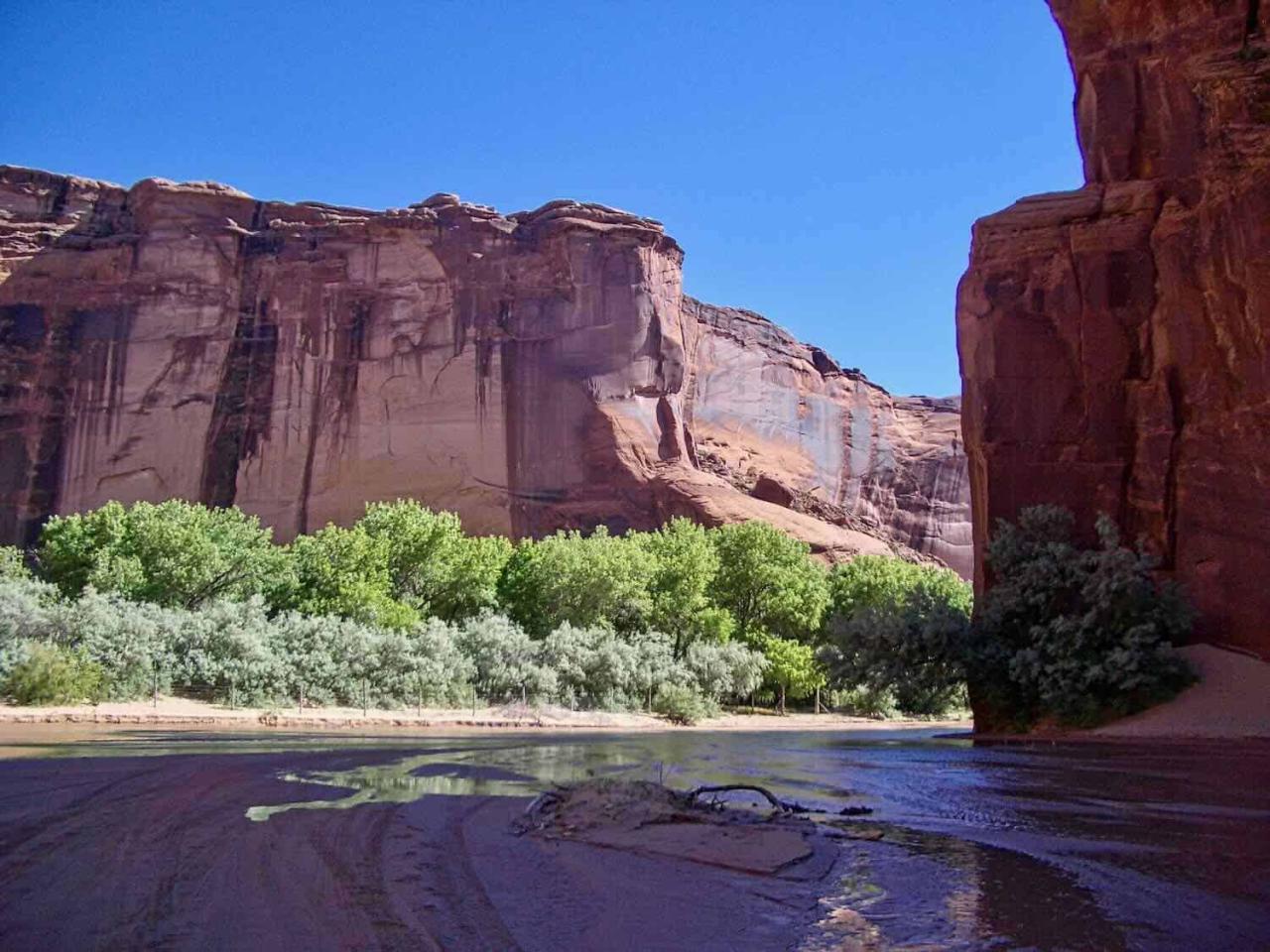
I question where we must be going as our Jeep Rubicon drives into Chinle Creek that flows through the canyon. Alan follows the 4-wheel-drive caravan through the flowing water and around a curve before exiting up a creek bank.
Accompanied by Navajo guide, Delbert Wilson, our group of four Jeeps learns about the canyon’s spiritual and cultural significance as the vehicles sway up the muddy bank of yet another creek crossing. Soon, we’re bouncing along the canyon floor next to the streaked, pink walls of sandstone cliffs.
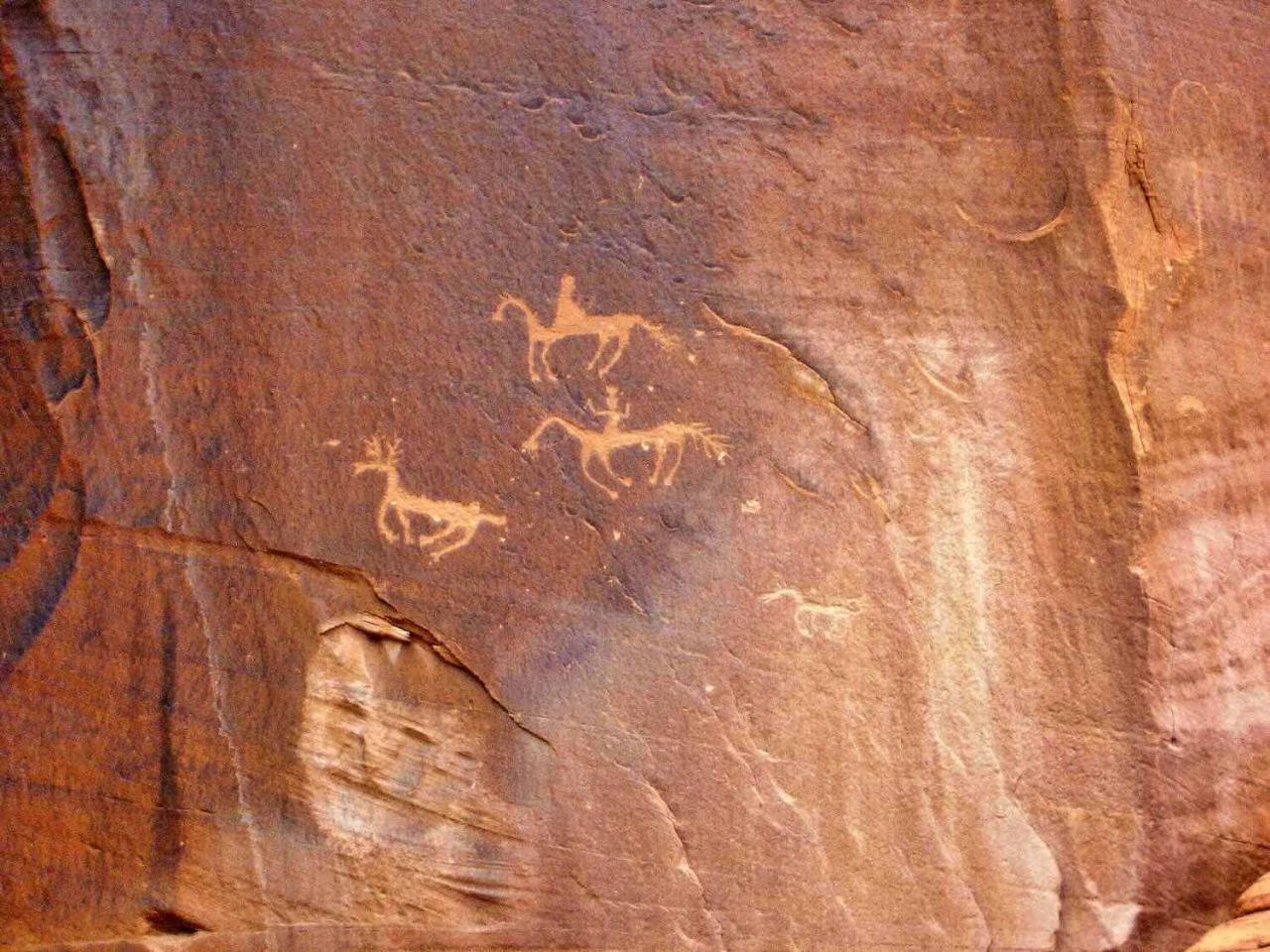
We stop to view and photograph petroglyphs that have been etched into the canyon wall. All total, there are more than 700 petroglyphs on the walls of Canyon de Chelly.
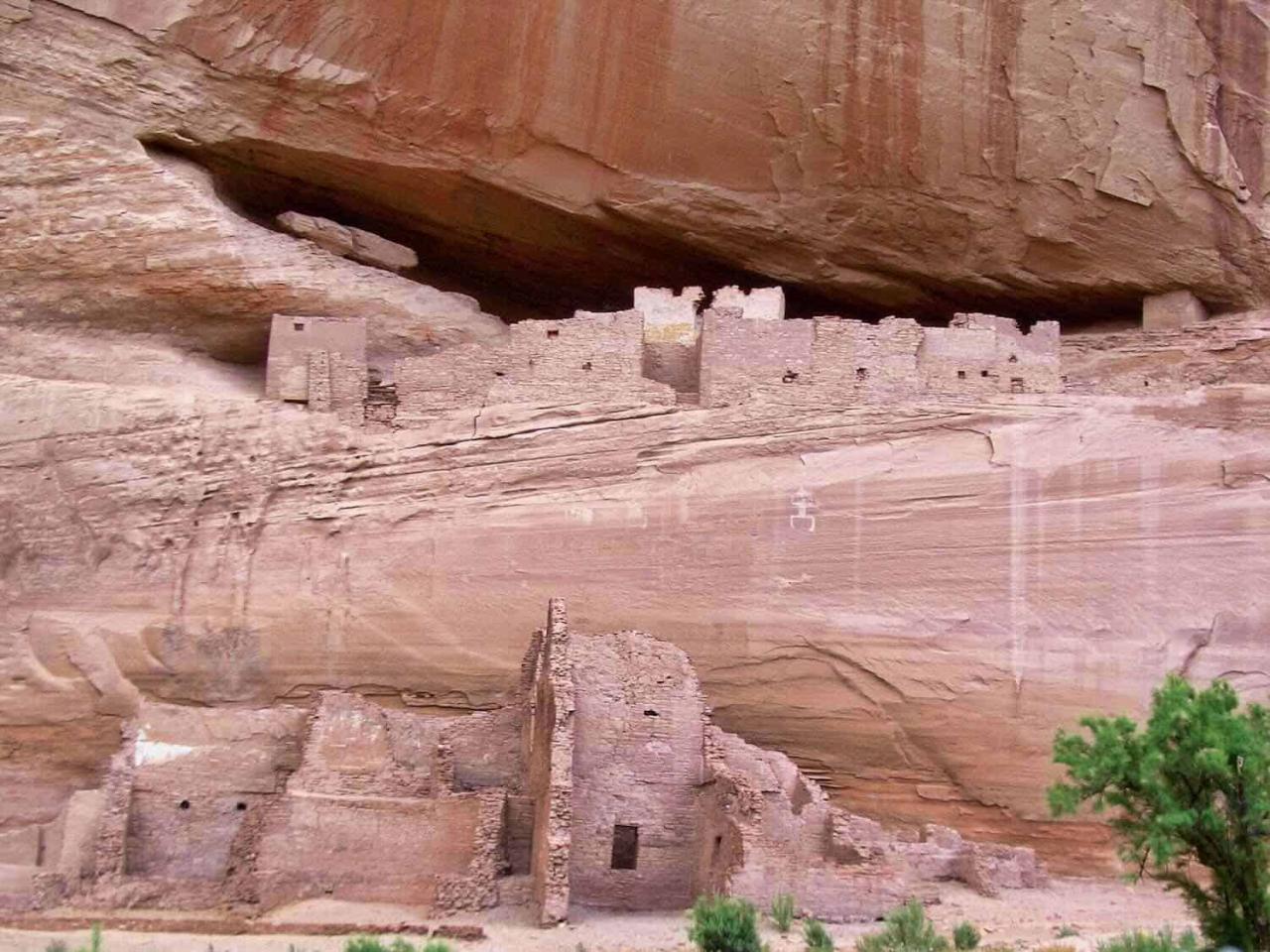
At White House Ruins, history whispers from the ancient cliff dwellings that once housed approximately 100 people. Researchers estimate that they inhabited White House Ruins from 1060 AD to 1275 AD.
Some visitors to the ruins arrive on foot via the 2.5-mile-round-trip White House Trail. The hike, which is accessed from White House Overlook on the South Rim Drive, travels 600 ft. down switchbacks to the floor of Canyon de Chelly. Check with the Visitors Center to confirm that the trail is open.
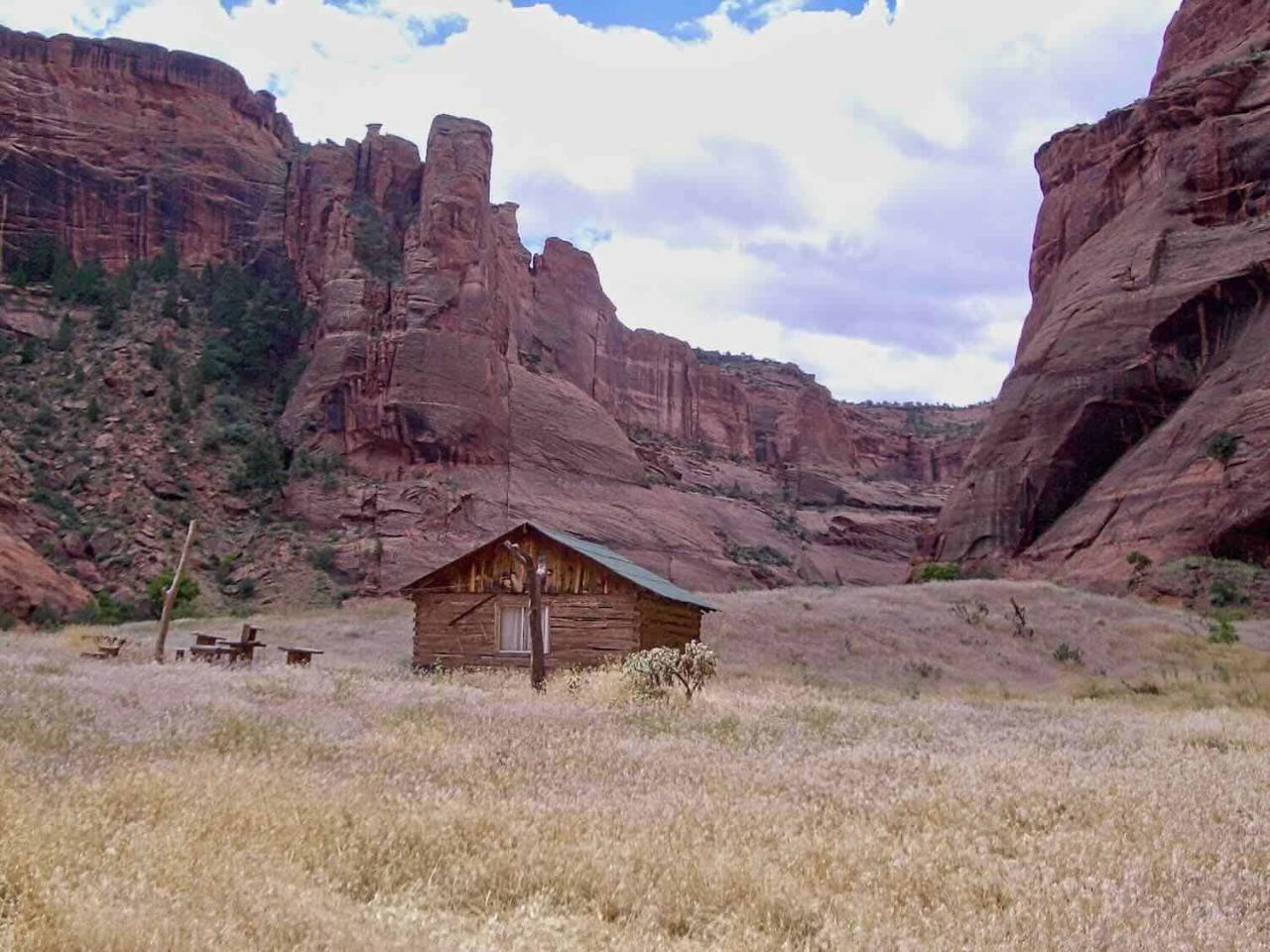
Continuing the drive, our group passes a hogan sitting in the middle of a grassy clearing. It’s a reminder that life still goes on in one of the longest continuously inhabited areas of North America.
In the summer, approximately 40 Navajo families consider Canyon de Chelly their summer home, growing crops and tending sheep. However a few families live here year round, enduring icy-harsh winter conditions.
BOOMER TRAVEL TIP
Take a look at our day hiking essentials before heading down the trail.
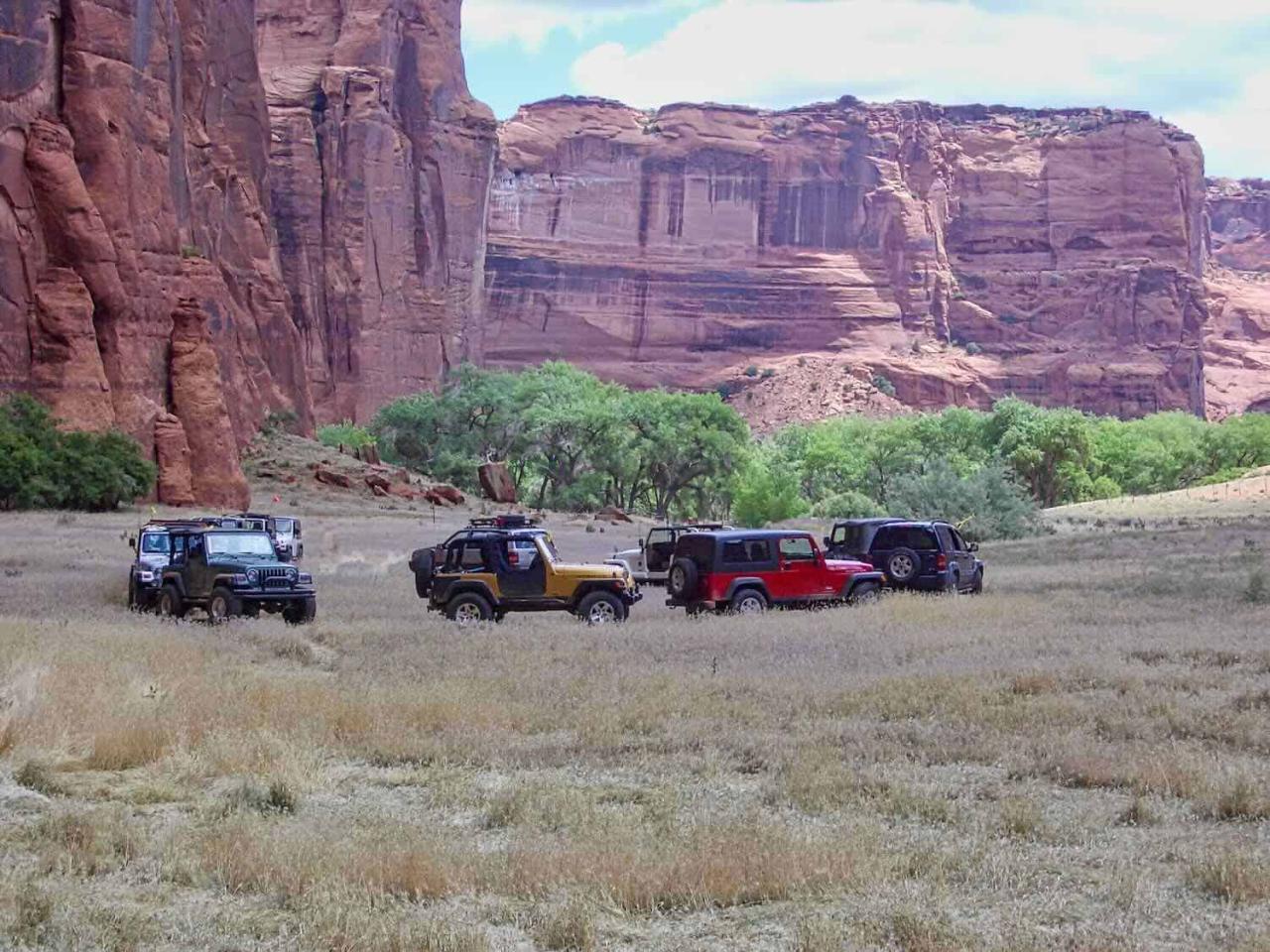
The Jeeps circle like a wagon train in a meadow near Spider Rock, an 800 ft. sandstone spire. Here, we relax with a picnic lunch as Delbert shares stories about his ancestors, including one about Spider Woman who lives at the top of Spider Rock’s tallest spire.
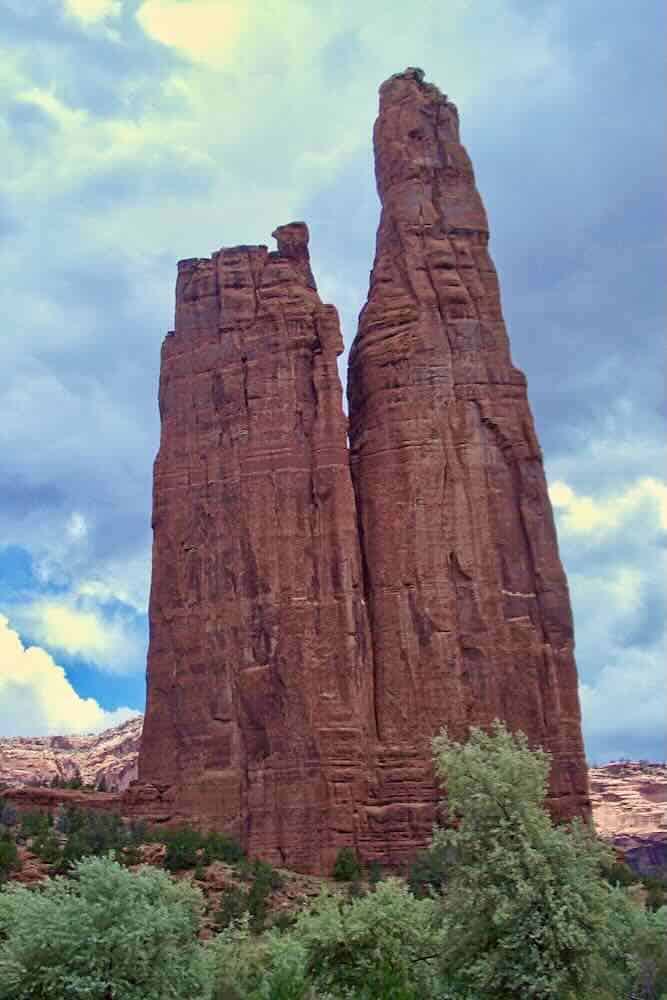
Navajo legend says that Spider Woman wove the web of the universe, teaching the Navajo how to weave. Tales of her darker side are used to discourage young children from misbehaving.