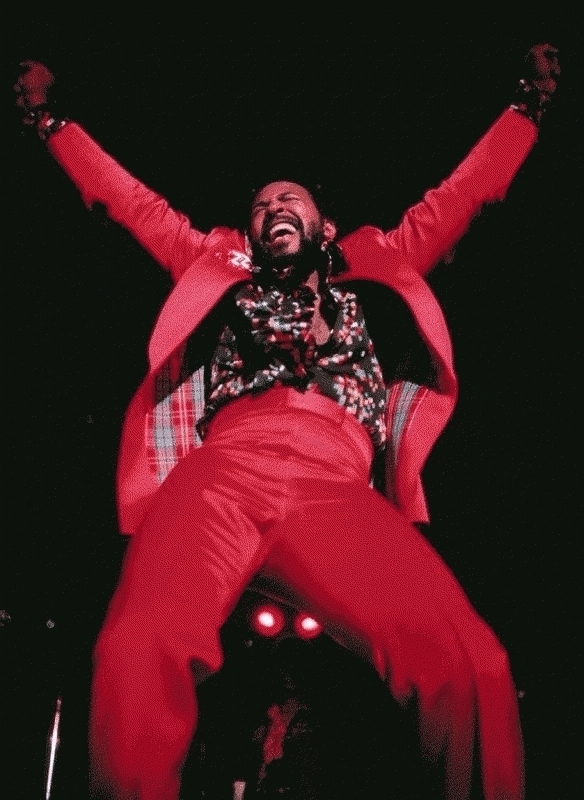
There are voices that seem to carry the whole soul of a generation, and Marvin Gaye had one of them. From the smooth ache of “What’s Going On” to the sensual pulse of “Sexual Healing,” he gave America a sound that could comfort and provoke in the same breath. Yet the story of how his life ended remains one of the most heartbreaking chapters in music history.
Marvin Gaye rose to fame as the Prince of Motown during the golden years of the 1960s and 1970s. Detroit’s Hitsville U.S.A. became a factory of dreams, and Marvin was among its brightest stars. His duets with Tammi Terrell, his socially conscious masterpiece “What’s Going On,” and his later comeback with “Sexual Healing” proved he could reinvent himself again and again.
But behind the velvet voice lived a man haunted by struggle. Marvin Gaye battled depression, cocaine addiction, and deep emotional wounds that stretched back to his childhood. Much of that pain traced to his relationship with his father, Marvin Gay Sr., a strict Pentecostal minister whose harshness had shadowed Marvin for his entire life.
By the early 1980s, Marvin had moved back into his parents’ home in Los Angeles, exhausted and paranoid after years on the road. The tension between father and son simmered dangerously. On April 1, 1984, a violent argument erupted. In the chaos, Marvin Gay Sr. pulled out a pistol—a gun his own son had given him months earlier—and shot Marvin twice. The Prince of Motown died just one day before what would have been his 45th birthday.
The aftermath stunned the nation. Fans who had swayed to “Let’s Get It On” and wept to “What’s Going On” could hardly believe that Marvin Gaye had been killed inside his family home, by the very man who raised him. His father later pleaded to a reduced charge and received probation, a sentence many still find impossible to accept. The reasons ranged from Marvin Sr.’s age to claims that he acted in fear during the fight.
What lingers is not the tragedy alone, but the strange poetry of it all—a man who sang about love, healing, and asking what was going on in the world, silenced in a moment of family rage. Marvin Gaye had spent his career trying to make peace with pain, and in the end that pain reached him at his own front door.
Decades later, the music of Marvin Gaye still fills radios, films, and quiet late-night moments. His records remain timeless because they were honest, drawn from a life that carried both glory and sorrow. When you hear that unmistakable voice today, you feel the tenderness of a man who understood suffering better than most.
Marvin Gaye gave America soul, and America never gave it back quite the same. His songs endure as reminders of a golden era and of a genius whose light was extinguished far too soon. So the next time “What’s Going On” drifts through your speakers, listen a little closer—and remember the man who lived, loved, and left us on the eve of his birthday.