By the late 1960s, America had almost written off Elvis Presley. The rebel who once shook his hips on Ed Sullivan had been domesticated by Hollywood. Year after year of mediocre movie soundtracks and formulaic scripts had tarnished his crown. The Beatles and the British Invasion had taken over the charts, leaving the King of Rock and Roll looking like a relic of a bygone era. Colonel Tom Parker wanted another safe, family-friendly Christmas special, but Elvis knew he was fighting for his artistic survival.
The tension behind the scenes was electric. The producers, led by a daring young Steve Binder, pushed Elvis Presley to reject the safe, holiday-themed television special his manager demanded. They wanted grit, sweat, and raw emotion. Elvis was terrified. He had not performed in front of a live audience in years. Rumors swirled in the industry that the King was washed up, a puppet of his manager’s greed, unable to compete with the heavy rock and psychedelic sounds of 1968.
Then came the night of December 3, 1968. When Elvis Presley stepped onto the NBC stage, the collective gasp of the studio audience could practically be felt through the television screens. He was not wearing a tuxedo or a festive sweater. Instead, he was clad from head to toe in tight, black leather. He looked dangerous again, possessing the same predatory grace that had scandalized the nation a decade earlier. He sat in a small circle, surrounded by his old bandmates and an intimate crowd just inches away, with nowhere to hide.
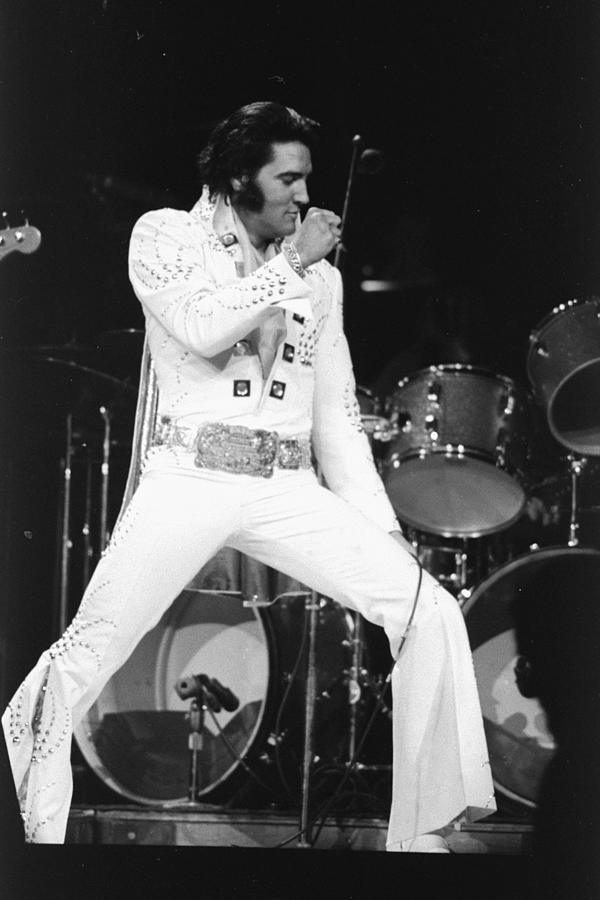
What followed was pure magic. Elvis Presley stripped his music down to its absolute bare essentials. He screamed, sweated, and poured his soul into the microphone. Hits like Heartbreak Hotel and Hound Dog recaptured their original menace, while his performance of Tiger Man reminded everyone of the raw, bluesy power he had pioneered. The black leather suit became a second skin, reflecting the heat of the studio lights and the intensity of a man reclaiming his throne. It was raw, unedited, and incredibly shocking for prime-time television.
That legendary broadcast, now simply known as the 1968 Comeback Special, did more than just save a career; it redefined American music history. It proved that Elvis Presley was not a manufactured Hollywood product, but a force of nature. In an era defined by political turmoil and cultural division, that single night of pure rock and roll united viewers in awe. It showed the world that true passion cannot be diluted by commercial formulas.
Today, decades after that fateful December night, the image of Elvis Presley in black leather remains one of the most iconic symbols of rock and roll redemption. It serves as a powerful reminder that sometimes you have to strip everything away to find your true voice again. What is your favorite memory of watching the King of Rock and Roll reclaim his crown on that historic night?