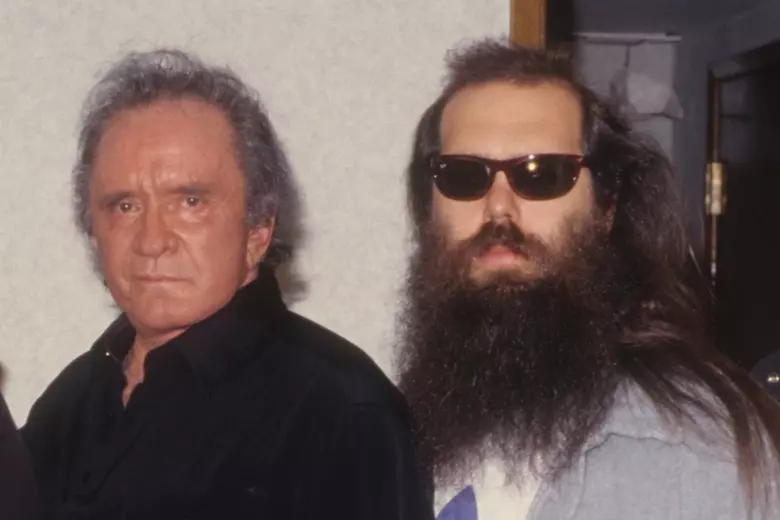
By 1994, the music industry had cruelly decided that Johnny Cash was a relic. The man who once stood at the center of the American cultural zeitgeist, synonymous with the raw rebellion of early rock and roll, found himself cast aside by a generation obsessed with the polished, neon-soaked production of MTV and synthesized pop. He was a ghost in his own industry, an outlaw who had supposedly lost his sting. Yet, in the quiet corners of a Los Angeles living room, a different kind of alchemy was about to take place—one that would prove the greatest power often lies in the most uncomfortable silences.
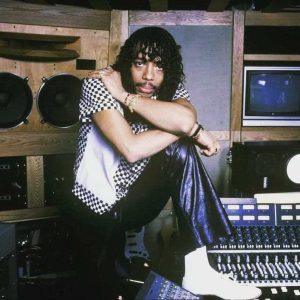
Rick Rubin, the wild-haired architect of hip-hop’s golden age and a provocateur of the industry, saw something in Johnny Cash that the bean-counters in suits had completely ignored. Rubin didn’t want the orchestral backing or the Nashville sheen that had softened Cash’s edges for decades. Instead, he wanted the truth. He stripped away the studio polish and placed a microphone in front of an aging legend, asking for nothing but his guitar and his soul. This was not a polished, multi-platinum marketing campaign; it was a desperate, authentic, and haunting resurrection of a voice that had been buried under decades of commercial expectations.
When they recorded the American Recordings album, the sessions felt less like a professional endeavor and more like a confession. Johnny Cash sat in a living room, his fingers worn and his voice weathered by years of internal demons and external trials. There was no safety net, no digital correction, and no hiding the tremors in his breath. This raw, skeletal arrangement became the template for an artistic renaissance. It was a stark departure from the disco-infused hits or the stadium glam metal of the era, offering instead a haunting reminder of what music used to be before it was commodified into mere product.
This partnership became the ultimate paradox: a young, punk-spirited producer and a country outlaw bridging the gap between generations. Rick Rubin understood that true resonance didn’t come from a heavy beat or a flashy music video; it came from the weight of experience. For listeners who grew up in the era of the Walkman, this collaboration sounded like a lightning strike. It brought a gritty, unvarnished humanity back to a music scene that had become increasingly plastic. The session proved that when you remove the artificial gloss of modern production, the core of an artist remains as eternal as the songs they sing.
Today, the legacy of these sessions serves as a testament to the fact that legends do not simply fade away; they are often just waiting for the right person to strip away the noise. Johnny Cash went on to record his most poignant work in the twilight of his life, reminding us that there is no expiration date on soul. In a world of fleeting trends, the honesty captured in that living room remains a permanent anchor. Sometimes, the most haunting melodies are the ones that finally dare to speak the truth when the rest of the world has stopped listening.