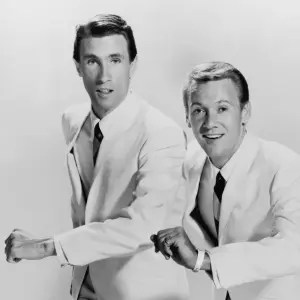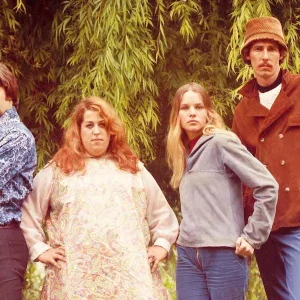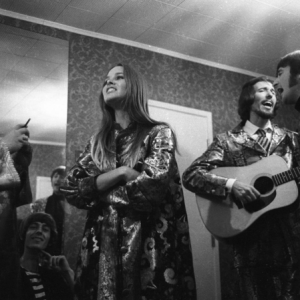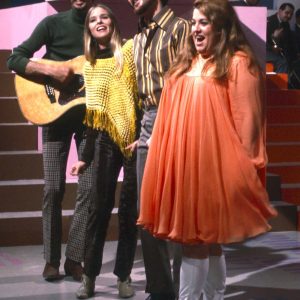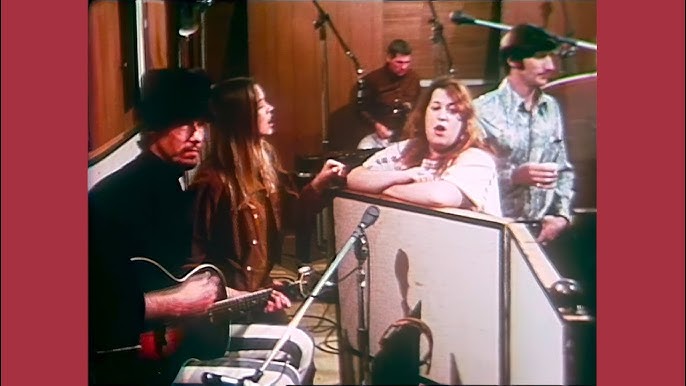
In the golden age of the late 1960s, few sounds defined the California dream quite like the celestial vocal blend of The Mamas and the Papas. With John and Michelle Phillips, Denny Doherty, and the powerhouse Cass Elliot, they seemed to embody the ultimate bohemian fantasy. Their harmonies were effortless, soaring over the airwaves with a brightness that suggested an unbreakable bond. Yet, for anyone who lived through those hazy, vinyl-soaked years, we eventually learned that the most beautiful melodies often mask the most jagged fractures. Behind the shimmering production of California Dreamin’, the quartet was trapped in a whirlwind of professional envy, complicated love triangles, and personal demons that eventually tore the group apart.
By 1971, the magic had not just faded; it had curdled. The final chapter of their recording career remains one of the most poignant footnotes in rock history. Forced into the studio to fulfill a crushing legal obligation, The Mamas and the Papas found themselves in a situation that would have broken lesser musicians. They were hit with a lawsuit that demanded one last album, a contractually mandated swan song that they had no personal desire to create. The irony was palpable: the band that once thrived on collective, intuitive performance was now fundamentally incapable of sharing a single room together without the atmosphere turning toxic.
To complete the project, the band members were forced to record their vocal tracks in complete, chilling isolation. Imagine the scene: a state-of-the-art studio filled with the ghost of what used to be. Each member stepped up to the microphone individually, singing their parts without looking into the eyes of their former comrades. They recorded in shifts, carefully curated by lawyers and producers to ensure that paths never crossed. It was the antithesis of the communal, folk-rock spirit that they helped ignite, a clinical dissection of a group that was once defined by its organic, soul-stirring chemistry. The resulting album, ‘People Like Us,’ stands as a haunting relic of a group that had already ceased to exist as a family.
This isolation serves as a stark reminder of the darker side of the 1960s music machine. We often look back at the era through a lens of rose-tinted nostalgia, but the toll taken on The Mamas and the Papas was profound. It wasn’t just about the drugs or the chaotic interpersonal dynamics; it was about the cold reality of a business that prioritized the product over the people who crafted it. When you listen to those tracks today, you might hear the same impeccable talent, but listen closer and you can almost hear the distance between them.
Even decades later, the story of The Mamas and the Papas resonates because it strips away the myth of the perfectly synced rock star life. They were human, deeply flawed, and caught in a cycle of fame that eventually demanded too much. As we pull those dusty records off our shelves and let the needle drop, we aren’t just listening to music; we are listening to a bittersweet memoir of a generation that learned the hard way that sometimes, even the most heavenly voices can no longer find a common chord.