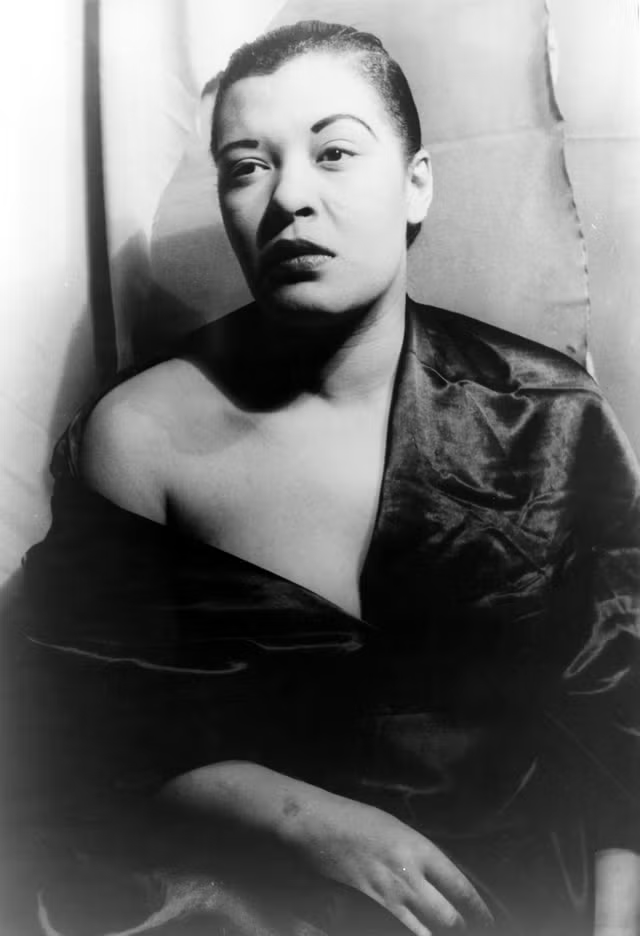
In 1939, one of America’s greatest record labels made a decision that would haunt the music industry for decades. Columbia Records refused to record Billie Holiday’s rendition of “Strange Fruit,” deeming it too controversial, too raw, too dangerous for commercial release. But Billie Holiday would not be silenced. She recorded it anyway on a smaller label, Commodore Records, and night after night, she closed her performances with those haunting words, the stage lights dimming as the audience sat in stunned, uncomfortable silence. No encores followed. None were needed.
That moment in 1939 marks one of the most powerful acts of artistic defiance in American music history. “Strange Fruit,” with its unflinching imagery of lynching in the American South, was a musical lynchpin for the civil rights movement decades before the movement gained mainstream attention. The song’s lyrics don’t whisper; they scream. They force you to see what polite society wanted to ignore. Columbia’s rejection wasn’t about sound quality or commercial viability. It was about fear. The label feared offending Southern audiences, feared alienating radio stations, feared the very power of truth that Billie Holiday possessed.
Billie Holiday’s decision to sing “Strange Fruit” anyway revealed something profound about her character. Here was a woman who had already endured unimaginable hardship—poverty, abuse, addiction—yet she understood that her voice carried a responsibility beyond entertainment. The song became her signature closing number, a ritual act of rebellion that transformed every concert into a moment of moral reckoning. Audiences who came expecting smooth jazz and romantic ballads instead left confronting the violence embedded in American soil. That contrast, that tension between expectation and reality, made the performance unforgettable.
What makes this story even more compelling is how Billie Holiday’s personal struggles intersected with her artistic courage. By the 1940s and 1950s, her life spiraled through addiction, abusive relationships, and legal troubles while she continued recording and performing music of extraordinary emotional depth. “Strange Fruit” wasn’t performed from a place of comfort or security. It was sung by a woman fighting her own internal battles, yet still choosing to fight for something larger than herself. That authentic vulnerability resonates powerfully even today, more than seventy years after her death in 1959.
The irony of history is delicious and bitter. That recording Columbia rejected, that “dangerous” version by Billie Holiday, eventually became recognized as one of the most important musical statements ever made. Music historians, cultural critics, and ordinary listeners now understand it as a masterpiece, a prophetic cry that predated the civil rights movement’s most visible chapters. Columbia’s fear proved baseless; what they were really afraid of was change itself.
When you listen to Billie Holiday sing “Strange Fruit” today, you’re listening to an act of courage frozen in time. You’re hearing a woman who refused to sanitize her art, who wouldn’t let corporate gatekeepers silence her conscience. In an era when so many artists compromise for commercial success, that choice feels almost impossibly brave. Billie Holiday paid the price for her integrity, battling demons both external and internal, yet her legacy stands unshakable. She proved that sometimes the most dangerous songs are the truest ones.
The question that lingers nearly a century later is whether we’re still listening. Whether we’re still willing to hear uncomfortable truths in the music we love. Billie Holiday’s answer was already written in every performance of “Strange Fruit,” in those dimmed lights and absent encores. She was listening to her conscience. The real question is whether we’re listening to hers.