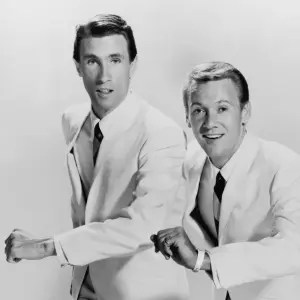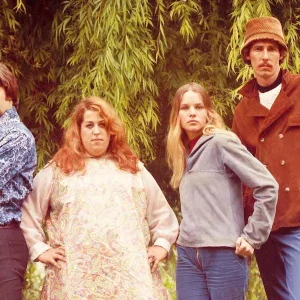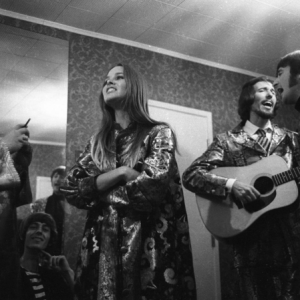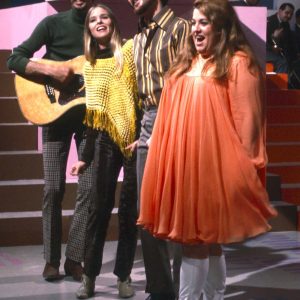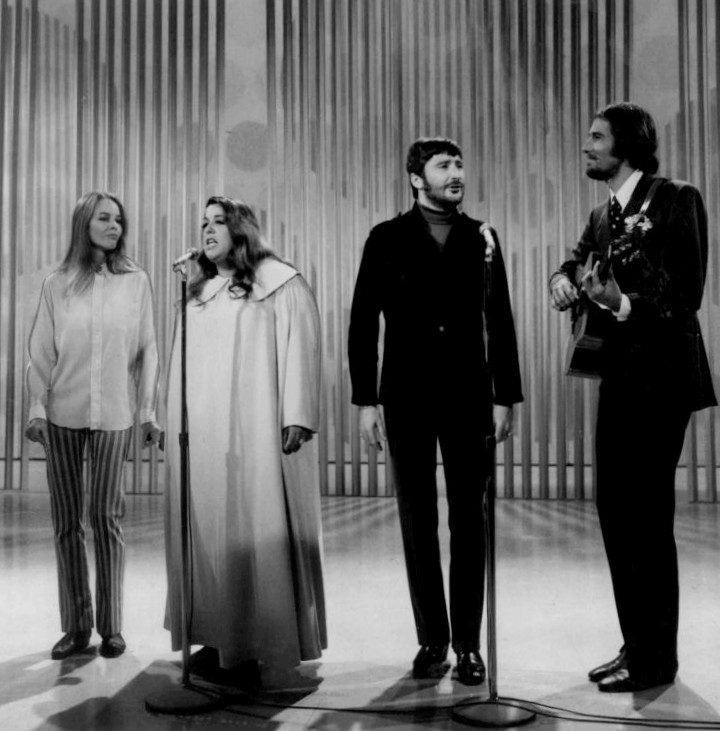
If you close your eyes and listen to the opening harmonies of California Dreamin’, you are transported back to a golden era of sunshine and polyester. But beneath the pristine vocal layers of The Mamas and the Papas lay a jagged reality that threatened to tear the band apart long before they reached the top of the charts. Behind the bright, breezy facade of the sixties, the group was a pressure cooker of tangled romances and bitter jealousy. At the center of this storm was the volatile marriage between band leader John Phillips and his ethereal muse, Michelle Phillips, a dynamic that would eventually force a breaking point that shook the music industry.
In the spring of 1966, the chemistry within The Mamas and the Papas finally snapped. John Phillips, the mastermind behind their complex sound, discovered that his wife, Michelle, had been carrying on an affair with their bandmate, Denny Doherty. For John, the betrayal was twofold; he had lost the woman he loved to the very man he shared the stage with every night. Fueled by a cocktail of professional rage and personal heartbreak, John did the unthinkable. He fired Michelle from the band, effectively attempting to scrub her presence from the harmony that defined their success.
Yet, the music business is rarely dictated by moral stances, but rather by the cold reality of profit and public image. Without Michelle’s signature voice and her magnetic presence, the band’s carefully constructed aura began to disintegrate. Live shows felt hollow, and the creative friction that had once fueled their songwriting turned into a leaden silence. Just weeks after her forced departure, John Phillips found himself in a humiliating position. He had to swallow his pride and beg Michelle to return, acknowledging that the magic of The Mamas and the Papas simply could not function without every piece in place.
It is easy to romanticize the sixties as an era of peace and free love, but the story of The Mamas and the Papas reminds us that the human heart is rarely so simple. Their songs—evergreens that still spin on turntables today—carry the weight of these secret tensions. We often forget that those perfect, soaring notes were frequently recorded through tears or after nights of heavy arguments. This friction gave their music an edge, a lingering melancholy that resonates with listeners who recognize that behind every great pop hit, there is usually an untold, often painful, human story.
Decades later, as we pull these LPs from our shelves, we are listening to more than just catchy pop melodies. We are hearing the sound of a group of people trying to hold their world together while their personal lives were falling apart. The Mamas and the Papas were not just a band; they were a mirror of the chaotic, beautiful, and deeply flawed decade they soundtracked. Next time you drop the needle on their greatest hits, remember that the harmony you hear was earned through fire, scandal, and a love that refused to stay buried.