Long before Oracle Arena shook with the thunderous roars of a modern NBA dynasty, the streets of Oakland, California, already knew the rhythm of absolute dominance. We watch Steph Curry dance past defenders today, thinking we are witnessing a brand-new kind of magic. But if you spin the dial back to 1990, the soundtrack of the East Bay belonged to a different king who claimed the exact same crown. Before the Golden State Warriors became untouchable on the hardwood, Stanley Burrell, better known as MC Hammer, had already taught the world what Oakland pride felt like.
Long before his signature parachute pants and infectious beats became a global phenomenon, MC Hammer was just a local kid with a passion for rhythm. In a fascinating twist of fate, he earned his legendary moniker while working as a clubhouse assistant for the Oakland Athletics baseball team. Hall of Famer Reggie Jackson noticed the young boy’s striking resemblance to home-run icon Hank Aaron. That nickname stuck, carrying him from the dusty baseball dugouts straight to the top of the Billboard charts. Hammer understood the theatricality of triumph, a quality that would later define the fabric of Oakland sports.
When his monumental LP Please Hammer, Don’t Hurt ‘Em dropped in 1990, it was not merely an album release; it was a cultural earthquake. Driven by the infectious, bass-heavy groove of U Can’t Touch This, MC Hammer achieved a level of multi-platinum success that hip-hop had never seen before. He was a force of nature, blending street-level authenticity with an arena-rock showmanship that filled stadiums worldwide. Vinyl records flew off the shelves as Oakland became the undisputed epicenter of pop culture, basking in an aura of complete invincibility that captured the imagination of a generation.
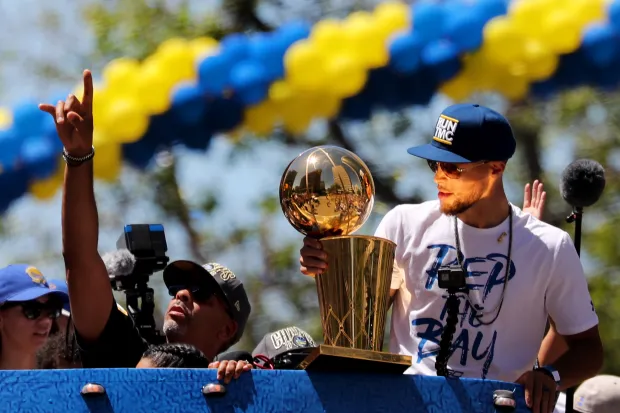
Decades later, that identical lightning struck the exact same town, wrapped in a blue and gold jersey. When Steph Curry arrived, he brought an unorthodox, high-energy style of play that perfectly mirrored the fast-paced choreography of the nineties rap pioneer. Curry’s uncanny ability to hit three-pointers from the logo and celebrate before the ball even cleared the net carried the same defiant charisma that Hammer once displayed on stage. The Golden State Warriors did not just win championships; they put on a nightly show, recapturing that elusive Oakland spirit where raw audacity met undeniable talent.
Today, looking back through a lens of deep nostalgia, we realize that the connection between MC Hammer and Steph Curry is more than just a coincidence of geography. It is a shared heritage of confidence, a handoff of local royalty from the recording studio to the basketball court. Oakland has always embraced the rebels, the pioneers, and those who dared to dance to their own beat. Whether listening to the hiss of a classic cassette tape or watching historical sports highlights, the message remains clear: the Bay Area always knows how to leave an untouchable mark on history.